


Parasites are microorganisms that survive by feeding on the host's body.When they settle in the human body, they cause serious health problems and can result in death as a result of their reproduction.
Parasitic organisms are usually divided into two types:
- Zooparasites, including parasitic worms (helminths, flatworms), arachnids, mites, molluscs, etc.
- Plant parasites include parasitic plants, viruses, pathogenic fungi, etc.
Parasites also include some types of viruses that lead a parasitic lifestyle at the expense of someone else's body.
Unfortunately, even modern society cannot fully protect itself from the infection of parasites, but if you check the parasites in time, you can prevent their reproduction and get rid of them without serious damage to your health.
Signs that indicate the presence of parasites in the human body
Parasites enter the human body through natural openings such as the mouth, genitals, and anus.Less commonly, helminths enter through the skin, genitourinary system, or ear.
The causative agent of the disease can be transmitted through food and water (most helminths), body contact with an infected person (pinworms), soil, air or dust (tubeworms).
Often, invasive diseases are asymptomatic and do not show their presence in any way.However, with excessive reproduction, symptoms of various diseases appear, which usually do not indicate the presence of parasites, which significantly complicates treatment due to the inability to make a correct diagnosis.
However, there are a number of signs that indicate the presence of parasites in the human body.
Among them:
- frequent headache;
- regular joint pain;
- unexplained muscle pain;
- frequent colds;
- allergic skin rashes;
- difficult bowel movements and constipation;
- teeth grinding during sleep;
- low performance, constant fatigue;
- increased irritability;
- insomnia;
- the appearance of cracks on the heels;
- difficulty breathing;
- violation of the gastrointestinal tract;
- sudden weight fluctuations;
- fragility of nail plates;
- itching in the anus.
Tumor neoplasms
It should be noted that parasitic diseases can cause serious problems.For example, a large number of helminths can form a ball and cause intestinal obstruction.
Parasites can also cause chronic cell damage, cancer, anemia, or jaundice.
Symptoms of parasites in children
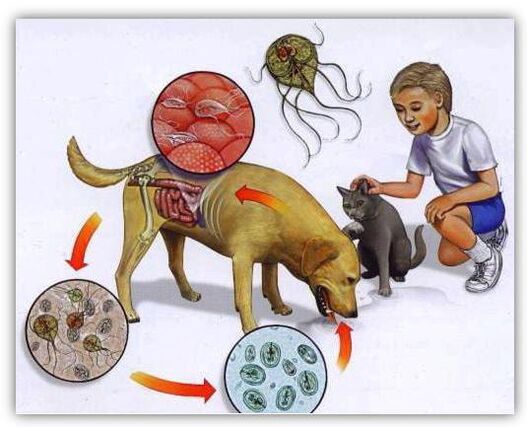
Symptoms that help determine the presence of parasitic organisms in a child:
- violation of the usual diet (lack of appetite, gluttony);
- increased body temperature;
- allergic rash;
- moodiness, weakness, irritability;
- dark circles under the eyes;
- pale skin;
- intestinal dysfunction (diarrhea with mucus or constipation);
- nausea and vomiting mainly in the first half of the day.
Most parasites cannot leave the human body on their own.Therefore, if at least one of the above symptoms appears, you should contact your local doctor or pediatrician, undergo an examination for parasites and undergo a course of treatment against helminths.
Diagnostics of invasive diseases
Diagnostics of invasive diseases involves detection of parasites (pinworms, amoebas) and their reproductive products (larvae, eggs).Preliminarily, a blood test, stool test, tissue scrap or sputum sample is prescribed.To examine the samples, the following is done:
- histological studies;
- immunological studies;
- blood macroscopy;
- Vegetoresonance tests.
Tests for the presence of parasites in children

Before turning to a specialist, parents often wonder which tests to take to identify parasites in their child and which method will give more accurate results.Analysis of invasive diseases in children is determined based on the location and type of parasites.
It is most often prescribed:
- blood test using the ELISA method;
- serological research;
- scraping or smearing by PCR method;
- blood test for adults and children.
A blood test is the most effective type of research and allows you to determine the exact form of the disease, the type of helminth, as well as the ability to reproduce.It allows determining the presence of ascariasis, toxoplasma, cysticercosis, amoeba and lichen.
One type of such research is the enzyme-linked immunosorbent assay (ELISA) blood test, which allows to evaluate the content of certain antibodies in plasma, to determine the stage of infection, to check the body's immune response to the effects of helminths, and to identify specific elements in the blood.
Advantages of ELISA research:
- the accuracy of the result, regardless of the qualification and experience of the laboratory technician;
- high sensitivity of the analysis, accuracy up to 90%;
- allows showing the full picture of the disease and the number of parasites;
- parasites are diagnosed at an early stage of development;
- the ability to monitor the dynamics of the disease;
- determination of the presence of toxic products in the blood.
When interpreting the result, the color of the reagent and the intensity of the sample shadow are taken into account.The ratio of antibodies to parasite antigens is measured by the level of IgM and IgG markers in the blood.High concentrations of IgM and IgG remain throughout the period of presence of helminths.
If the blood test shows a high level of IgM, then the disease is acute.IgG antibodies indicate a chronic form of the disease.
Disadvantages of the blood test for the diagnosis of parasitic diseases:
- The result of the blood test by ELISA method is obtained within 7 days, and the scrap, smear and stool samples are obtained after 1-2 days;
- The research must be done in a special laboratory for a fee.
It is recommended to give blood on an empty stomach in the first half of the day;it is advisable to refrain from taking medicine 12-15 hours before taking blood.Parents are advised to prepare their child in advance.
Stool analysis
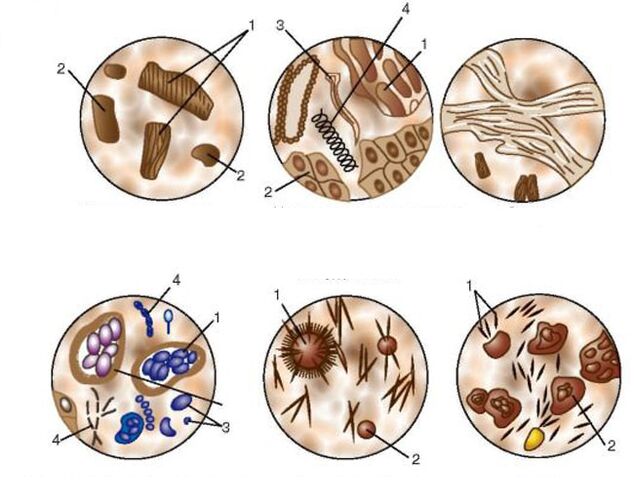
Microscopic analysis of feces may be required for the initial determination of helminths by the traditional method.The study determines the presence of parasite eggs in the fecal fragment.
The most accurate result is the result shown in 3 tests within a week.
For the most accurate result, a piece of feces should be submitted to the laboratory for examination no later than 45 minutes after defecation.
Parasites during the study, for example:
- tapeworm;
- topics;
- roundworms.
Although this type of diagnosis is quite easy, it cannot claim 100% accuracy of the results.This is due to the fact that parasites living in the human body do not lay eggs for a long time.